Security depends on people who understand it.

I help organizations, their leaders and security managers develop security arrangements that work over the long term. Through mentoring and strategic consultations, I support internal teams in building the skills and confidence to manage their work independently.

Three ways to work together

I am not a company and I do not try to be everywhere. I work alone, and for specific projects I bring in trusted specialists.

Long-term mentoring of the security manager

I provide regular support to the person responsible for security in your organization. I help them develop strategy, work through specific situations and build their skills. The aim is for them to manage security independently and develop a system that works for their organization.

This includes regular consultations, usually several times a month, phone availability during crises and additional consultations as needed.
Strategic consulting and leadership advisory

On shorter projects, I help leadership or coordination teams assess the security situation, develop strategy and prepare decision-making materials or presentations. I work as an external adviser.

We agree on the scope and deliverables in advance. Projects usually last from a few weeks to several months.

Original training programs and courses

I develop training programs for security managers, drawing on twenty-five years of practice, international collaboration and lessons from real incidents. I currently direct the comprehensive course for soft-target protection managers described below.

I offer multi-day courses, in-house training and individual seminars for leadership teams.

Who I work with

I work with organizations that want to improve their security and support the people responsible for it.

Universities and higher education

Universities need to protect large numbers of people while remaining open and respecting academic culture. I support their security managers and help develop a strategy for their leadership.

Cultural and heritage institutions

Museums, galleries and theatres need to remain accessible to the public while responding to specific threats. Together, we develop arrangements that account for high visitor numbers and a limited security presence.

Corporations with international reach

I help companies whose employees travel to high-risk countries or work abroad. We develop their duty-of-care arrangements, from preparing for travel and working abroad to responding to a crisis.

Public administration and local government

I work with regional and municipal authorities, ministries and other public institutions. I advise on security strategies, leadership briefings and crisis plans.

Nine topics that often come up in mentoring

Each organization brings different needs. These nine topics come up most often in my work with security managers.

These topics mainly concern the security of buildings and sites belonging to schools, museums, cultural institutions, businesses and public authorities. For one-off events, I choose topics according to their specific needs.

Incident management and record-keeping

How to record, assess and review incidents so that the organization can identify recurring problems and prepare for more serious events.

Questions to consider
  • What counts as an incident, and who records it?
  • How do we distinguish a recurring pattern from an isolated event?
  • Does anyone review and analyze the recorded incidents?

Employee procedures during an incident

Clear procedures for employees: what to do, whom to call and what to avoid.

Questions to consider
  • Do employees know a specific person they can turn to?
  • Do people know the procedures, or are they only written in an internal policy?
  • Do we explain what employees should avoid doing and why?

Front-line staff: gatehouse, reception and security

What the people who encounter problems first need to know. What they check, when and to whom they report concerns, and how we review the quality of their work.

Questions to consider
  • Which situations must staff recognize, and which should they refer to someone else?
  • How do we check that staff have what they need and follow agreed procedures?
  • What are we still leaving to improvisation?

Strategic development and leadership briefings

How to plan security over the longer term and give leadership the information they need to make decisions.

Questions to consider
  • What are our security objectives for this year?
  • What information does leadership need to decide on specific measures?
  • What would we like to have in place in three years?

Safe areas inside buildings

How to survey spaces and assess which could serve as shelter. We examine door strength and other features that may make a room unsuitable.

Questions to consider
  • Which spaces would actually provide shelter, and which only appear safe?
  • Do people know where to go on every floor and in every building?
  • What will need to change when a building is refurbished or altered?

Crisis communication

Who prepares, approves and sends a message, and how it reaches people. We develop templates and backup procedures in case technology fails.

Questions to consider
  • Who sends messages to employees, the public and families?
  • Do we have templates for the three to five most likely scenarios?
  • What do we say in the first fifteen minutes, when we do not yet have the full picture?

Behavioral threat assessment

How to identify and assess warning signs without intruding disproportionately on people’s lives. We agree on when action is needed and how to proceed.

Questions to consider
  • Do we collect warning signs? Where, and who assesses them?
  • Who has the authority to decide what to do, and on what basis?
  • How do we assess situations where someone is in crisis but poses no danger?

Warning and activation systems

Reviewing public-address systems, text messages, apps and in-person warnings. We develop scenarios and check that the system works at night and on weekends.

Questions to consider
  • Which communication channels have we tested, and which are we assuming will work?
  • Who issues the warning, and do they have the necessary access and authority?
  • When did we last test the system outside working hours?

Crisis team and leadership coordination

Preparing the team around the director or rector to make decisions and communicate during a crisis. Tabletop exercises help clarify roles, situation monitoring and shift handovers.

Questions to consider
  • Who makes decisions during a crisis, and who takes over if they are unavailable?
  • Have we ever practiced together, or only separately?
  • Who communicates with the public, and who communicates with people inside the organization?

Where my experience comes from

Six projects that have had a particular influence on my work. I am happy to share further examples on request.

2016 Ministry of the Interior, CZ

Methodology for the protection of soft targets

I led the team that produced the first comprehensive guidance on soft-target protection for the Czech Ministry of the Interior. It brings together facility security, critical infrastructure protection and crime prevention. Organizations across the public sector now use these materials.

2024 Charles University

Crisis staff and transformation of security after the shooting at the Faculty of Arts

After the shooting in December 2023, I served on Charles University’s Central Crisis Staff. I then led an extensive security analysis and the preparation of recommendations for the faculties and rectorate. This work also became a reference point for other universities in the Czech Republic.

2024 – present University of Pardubice

Expert advisory and strategic consulting

I provide ongoing advice on soft-target protection, helping develop strategy, prepare briefings for the rector and establish security arrangements. I would like to develop this kind of collaboration further.

2020 – 2021 City of Prague

Crisis staff during the COVID-19 pandemic

I contributed to the analysis, planning and coordination of support measures for vulnerable groups. I continue to draw on this experience of making decisions under pressure with incomplete information.

2018 – present Forum 2000

Security for international conferences

I prepare security arrangements for Forum 2000 Foundation conferences, attended by prominent figures and journalists facing threats. We work to keep the event open to the public while protecting participants.

ongoing Public sector

Training of regional Police CZ specialists and analysis of the Chamber of Deputies

I developed and delivered a series of training sessions for Czech Police specialists from across the regions. I also carried out a threat assessment for the Chamber of Deputies building, considering both security and public access.

What clients say about working together

Short reflections on security and people

Three thoughts from interviews I have given to Czech media in recent years. I return to them with every client.

You don’t turn a soft target into a hard one

„Unfortunately we have plenty of experience with attempts to raise security by trying to turn a ‘soft target’ into a ‘hard target’. And the work is not done by those cameras — it is done by the people who operate them.“

UK Forum, 2024

The center of gravity is preparedness

„We are taking the path of building resilience — so that we are able to absorb with the smallest possible impact. And in the end, the center of gravity will lie in the readiness of individuals to use whatever they can.“

UK Forum, 2024

An attack cannot be prevented

„With active shooters, preventing the attack is very difficult or simply impossible. All we can do is reduce its impact and make sure the warning spreads through the building as quickly as possible.“

Hospodářské noviny, 2023

Comprehensive course for soft-target protection managers

I serve as the course’s academic lead and director.

The first comprehensive program of its kind in the Czech Republic. It combines Israeli lecturers from the International Institute for Counter-Terrorism (Reichman University) with Czech and Slovak experts. Three four-day blocks, 87 hours of instruction, simultaneous EN ↔ CZ interpretation. Organized by Soft Targets Team in cooperation with VOX and ASIS International.

3 × 4 days87 hours Prague · VOXVenue 11/2026 → 5/2027Dates
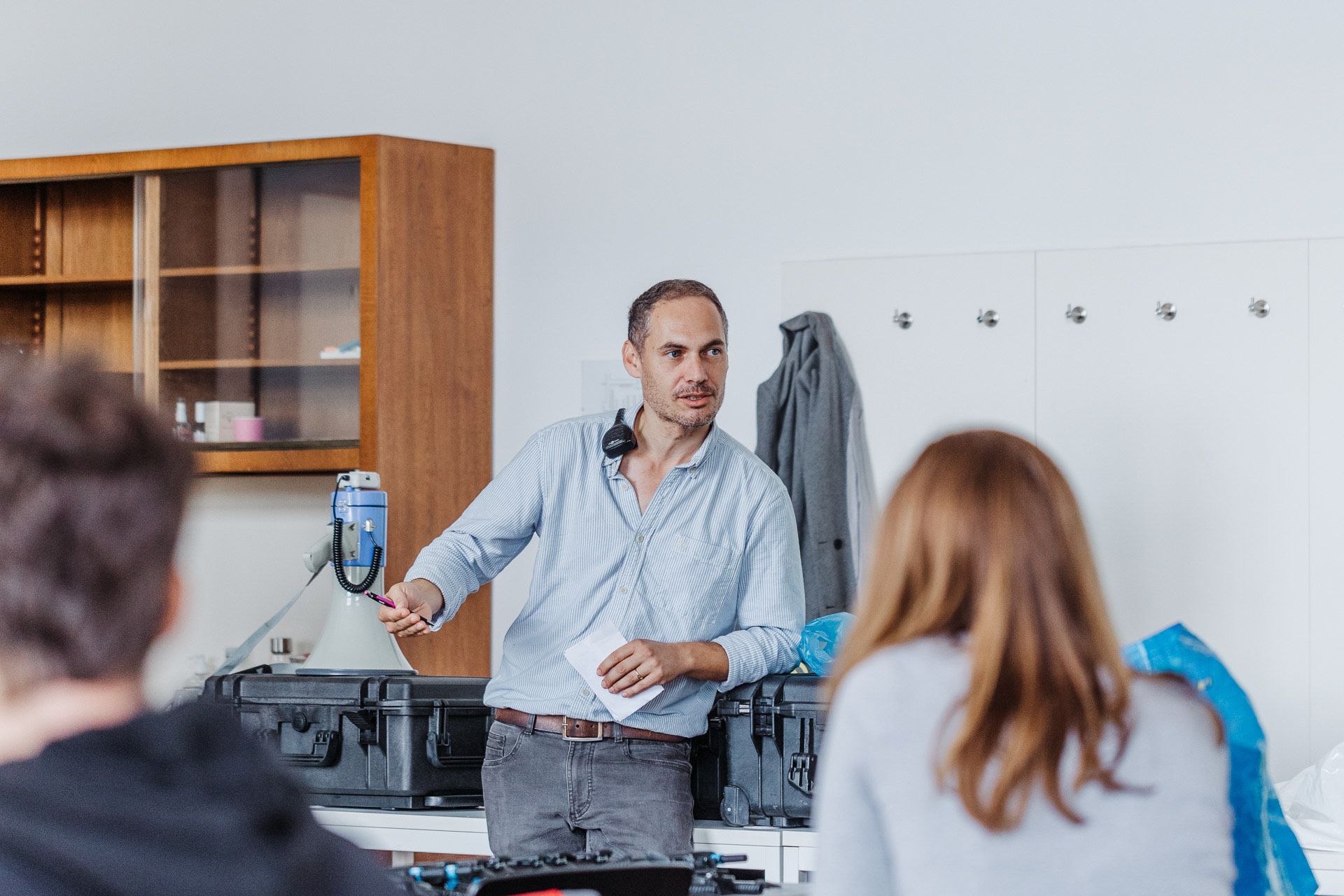
Zdeněk Kalvach during his original course for security managers
From an original course for security managers

How prepared is your organization for incidents?

Eight questions take you through four areas of preparedness for serious incidents. Your results appear in a chart with my comments on each area. The assessment takes about five minutes.

8 questions·~ 5 minutes·anonymous·free
Start the self-assessment

How would you handle a difficult day at the office?

An anonymous call, a suspicious package, an unattended bag, a colleague in crisis or an armed person at the entrance. Choose a character and decide how to respond. After each choice, you can see what the actual procedures recommend. The jokes are fictional; the procedures are not. The game is in Czech.

3 characters · 5 situations · about 4 minutes · anonymous
Play the game (in Czech)

Interviews and podcasts

Selected interviews on soft-target protection, crisis planning and raising resilient children.

If an interview interests you, get in touch. I am happy to suggest others.

Write to me

If you are considering long-term cooperation or a short-term consultation, a few sentences about what brings you here are enough. I usually reply within two working days.

Go to contact